In the vast landscape of Vedic worship, few practices carry the transformative power of the homam — a sacred fire ritual that has been performed in India for over 5,000 years. Also known as havan or yajna, a homam is not merely a ceremony. It is a precise technology developed by ancient rishis to communicate with divine forces, purify karma, and align a person's life with cosmic order.
For NRIs living in the UK, USA, UAE, Australia, or Singapore, access to this profound practice can feel distant. This guide aims to bridge that gap — giving you a clear, thorough understanding of what a homam is, how it works, and how you can participate in one from wherever you are in the world.
The Word "Homam": What Does It Mean?
The Sanskrit root of "homam" is hu, which means "to offer" or "to sacrifice." Homam therefore literally means "an act of offering into fire." In the Vedic tradition, fire — Agni — is not a mere element but a conscious deity, the first of the 33 principal devas. Agni is understood as the bridge between the human and divine realms, perfectly suited to carry offerings upward.
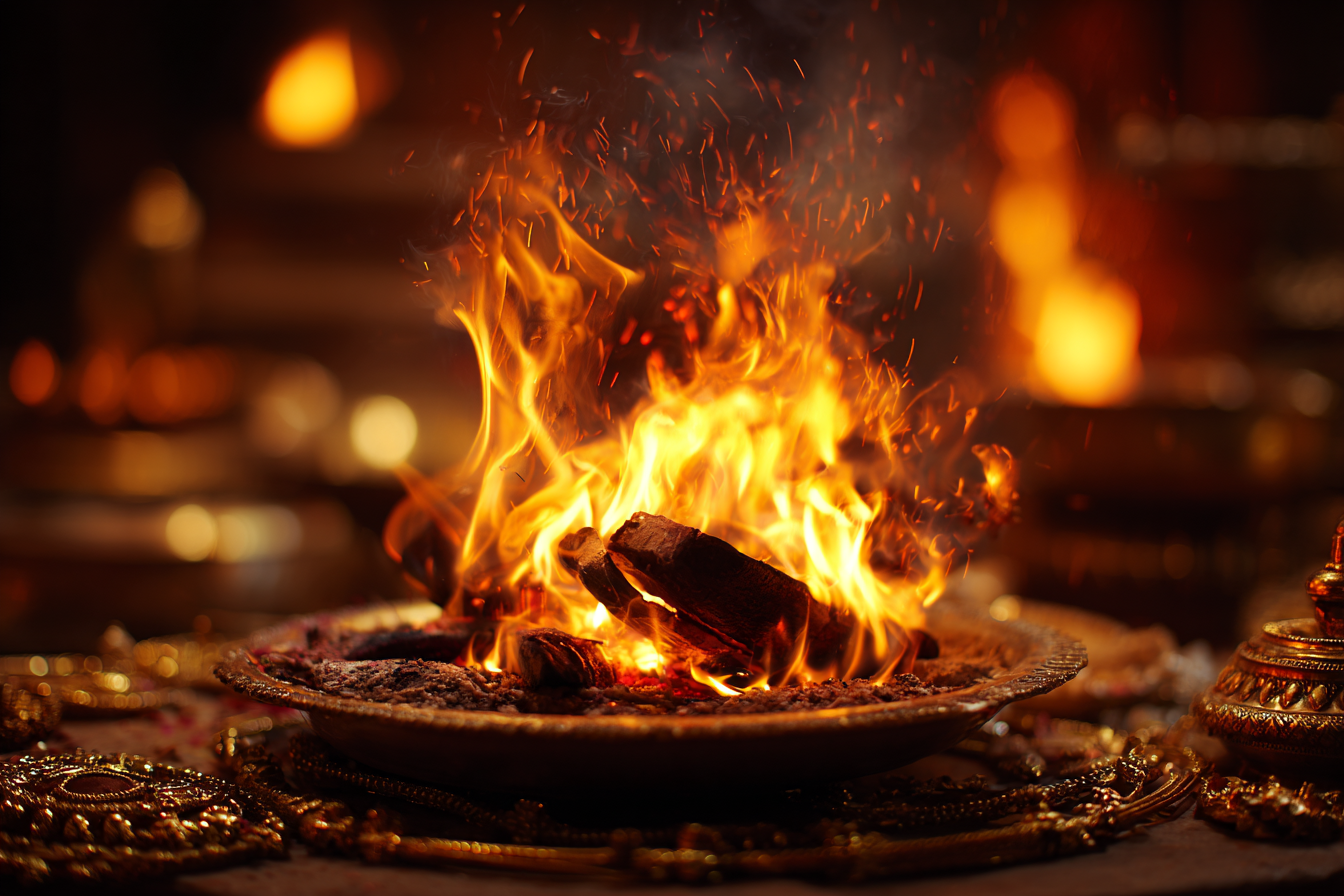
The Rig Veda, the oldest of the four Vedas (composed approximately 1500–1200 BCE), opens with a hymn to Agni: "Agnim ile purohitam yajnasya devam ritvijam" — "I praise Agni, the priest of the sacrifice, the divine minister of the yajna." From this opening verse, we understand that fire-worship is not peripheral in Vedic thought — it is foundational.
"Fire is the only element that simultaneously exists in all three worlds — earth, atmosphere, and heaven. This is why the Vedas chose Agni as the divine messenger."
How Does a Homam Work?
A homam operates on several interlocking principles drawn from Vedic physics, Sanskrit phonetics, and ritual science (kalpa). Understanding these layers helps explain why the practice remains relevant even today.
1. The Homa Kunda — The Sacred Fire Pit
The fire is kindled in a specially constructed pit called the homa kunda. The shape and dimensions of the kunda are not arbitrary — they follow precise Sulba Sutra mathematics (the Vedic geometry texts) and correspond to the desired outcome. A square kunda attracts stability and abundance. A triangular kunda is used for removing obstacles. A circular kunda is associated with healing and moksha.
2. Samidha — The Sacred Wood
Different species of wood are used depending on the homam type. Bilva (bel) wood is used in Shiva-related homams; Palasha (dhak) and Ashwattha (peepal) are common in general fire rituals. Each wood species carries a specific set of aromatic compounds that interact with mantras and produce particular atmospheric effects.
3. Ahuti — The Offerings
Into the fire, specific substances called ahuti are offered in rhythm with mantras. These typically include:
- Ghee (clarified butter) — the primary vehicle of offerings
- Sesame seeds (til) — for ancestral rites and obstacle removal
- Rice and barley — for prosperity and abundance
- Specific herbs, roots, and aromatic substances for specific intentions
- Fruits and flowers corresponding to the deity
4. Mantras — The Sonic Backbone
Mantras are not prayers in the Western sense — they are precise sonic formulas. Each syllable vibrates at a specific frequency that, when pronounced with correct intonation (svara) and rhythm, generates a measurable effect on both the practitioner's nervous system and the surrounding energetic environment. A trained Tantri like Dr. Aswanidev Tanthri has spent decades mastering these intonations under the Gurukula system.
Types of Homams
There are hundreds of types of homams described in Vedic literature. The most commonly performed today include:
- Ganapathi Homam — performed before any new beginning; removes obstacles
- Sudarshana Homam — protection from evil energies and black magic
- Mrityunjaya Homam — for health, healing, and overcoming fear of death
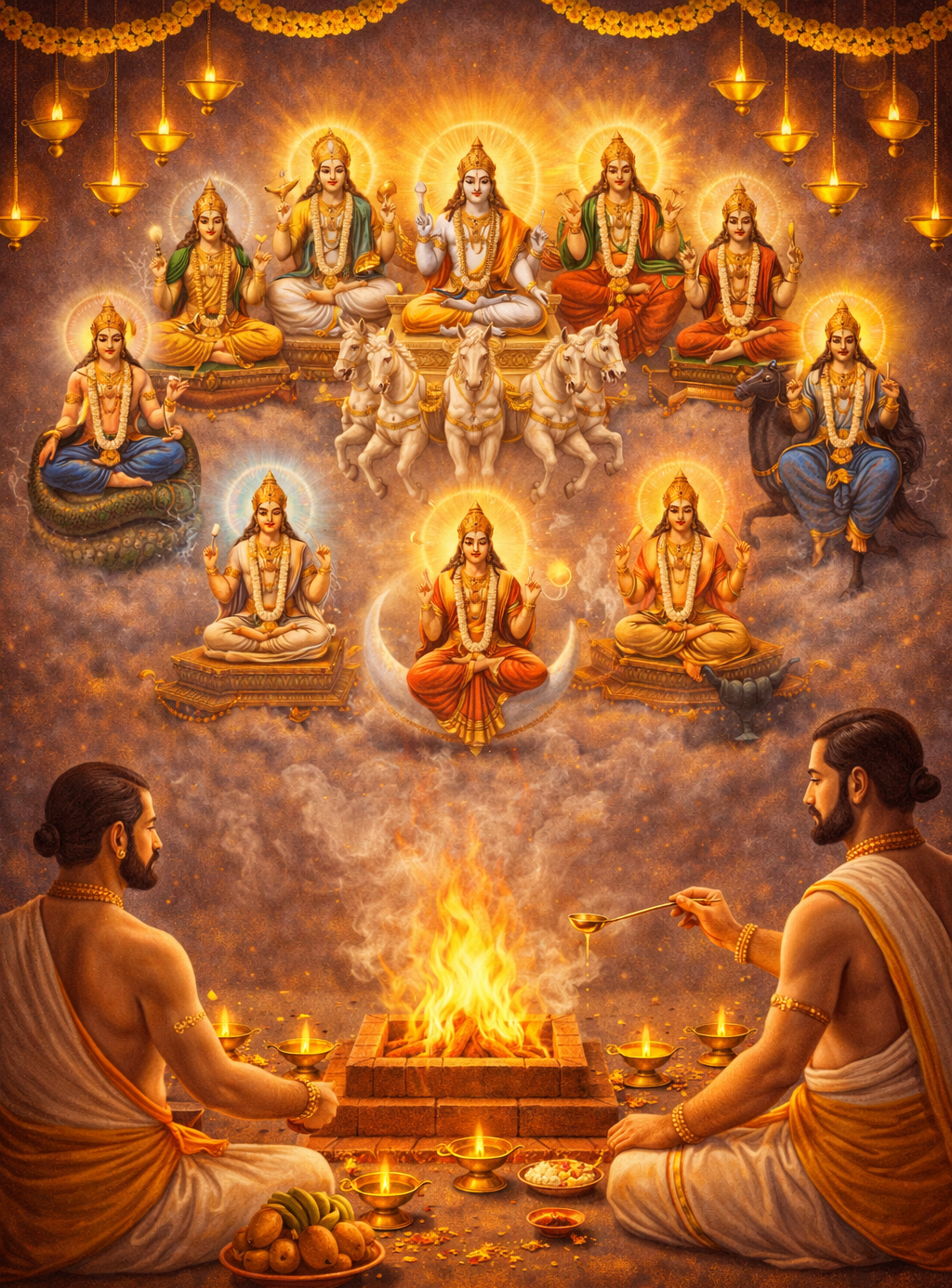
- Navagraha Homam — propitiating all nine planets simultaneously
- Lakshmi Kubera Homam — for wealth, financial growth, debt relief
- Chandi Homam — invoking the fierce divine feminine for protection
- Ayushya Homam — performed on birthdays for longevity
- Athirudra Mahayajna — an elaborate multi-day yajna for Dr. Aswanidev Tanthri's world-record ritual
What Does a Homam Actually Achieve?
This is the most common question asked by educated NRIs approaching Vedic rituals for the first time. The answer operates on multiple levels.
Spiritually, a homam creates a temporary but powerful sacred space — a zone of heightened divine presence. The Sanskrit term is divya kshetra. Within this space, prayers are amplified, karma is processed more rapidly, and blessings from the invoked deity flow more freely.
Energetically, the combination of fire, sound vibration, aromatic smoke, and focused intention creates what quantum physicists might call a coherent field. Ancient rishis called this yajna phala — the fruit of the yajna. This energy affects not only the sponsor of the homam but radiates outward into the surrounding community and, in large yajnas, the entire region.
Practically, devotees report tangible shifts in their lives within weeks of a well-performed homam — resolution of long-standing obstacles, improved health, improved business opportunities, and a general sense of clarity and peace.
Can NRIs Participate in a Homam?
Absolutely — and this is where Tapovanam Poojas bridges tradition with modern life. When you book a homam through us, here is what happens:
- Your name, nakshatra, and gothram (lineage) are collected during booking
- Dr. Aswanidev Tanthri performs the homam at an authentic Vedic temple with proper sankalpa (intention-setting) in your name
- You receive a video recording of the ritual
- Prasadam (sacred ash/vibhuti, turmeric, kumkum) is dispatched to your address
- You may join live on WhatsApp video during key moments if desired
"In the Vedic worldview, the sankalpa — the sacred intention — transcends physical distance. Your presence in heart and name is sufficient for the ritual to carry its full power to you."
How to Prepare for Your Homam
Even as a remote participant, some preparation enhances the efficacy of the ritual:
- On the day of the homam, maintain a sattvic (pure) diet — vegetarian, light, no alcohol
- Take a bath before the ritual begins and wear clean clothes (white or saffron preferred)
- Set up a small clean space at home with a lamp, incense, and an image of the deity
- Observe a period of silence or prayer during the ritual if possible
- Receive the prasadam with both hands and consume it with reverence
Book a Homam Today
Dr. Aswanidev Tanthri — Tantri of 60 temples and holder of the World Record Athirudram 2023 — performs homams with unparalleled precision and devotion. Whether you seek healing, prosperity, protection, or spiritual advancement, there is a homam designed for your specific need.
Browse our full list of homams and book directly via WhatsApp. Prasadam dispatched worldwide.