In the Vedic calendar, not all months are equal. While every month carries its own sacred character, Karthika Masam — the eighth lunar month, falling roughly between mid-October and mid-November in the Gregorian calendar — is revered across all Vedic traditions as the most spiritually luminous month of the year. The Skanda Purana, Padma Purana, and Narada Purana all affirm that a single act of devotion performed in Karthika carries the merit of a thousand such acts performed in any other month.
For NRI devotees who may observe only a few key religious occasions each year, Karthika Masam deserves to be one of them. This article explains why — and what specific practices carry the most potency during this sacred window.
Why Is Karthika Masam Special?
The Vedic year is governed by the movement of the Sun and Moon through the twelve rashis. Karthika Masam corresponds to the period when the Full Moon (Purnima) occurs in the Nakshatra of Krittika — the Pleiades star cluster, associated with Agni (fire) and governed by the Sun. This astronomical alignment is understood in Vedic cosmology as a moment when the cosmic fire principle is at maximum intensity — making it the ideal period for lamp lighting, fire worship, and all Agni-based rituals.
Additionally, Karthika is sacred to both Lord Shiva and Lord Vishnu — a rare quality that makes it auspicious for devotees of all traditions. The Skanda Purana calls Karthika "the month that belongs to Hari and Hara" — Vishnu and Shiva simultaneously.
"In Karthika, the veil between the human and divine realms grows thin. The lamp you light in your home during this month is not just fire and ghee — it is a direct communication with the divine light that underlies all creation."
The Five Core Practices of Karthika Masam
Deep Daan — Lamp Lighting
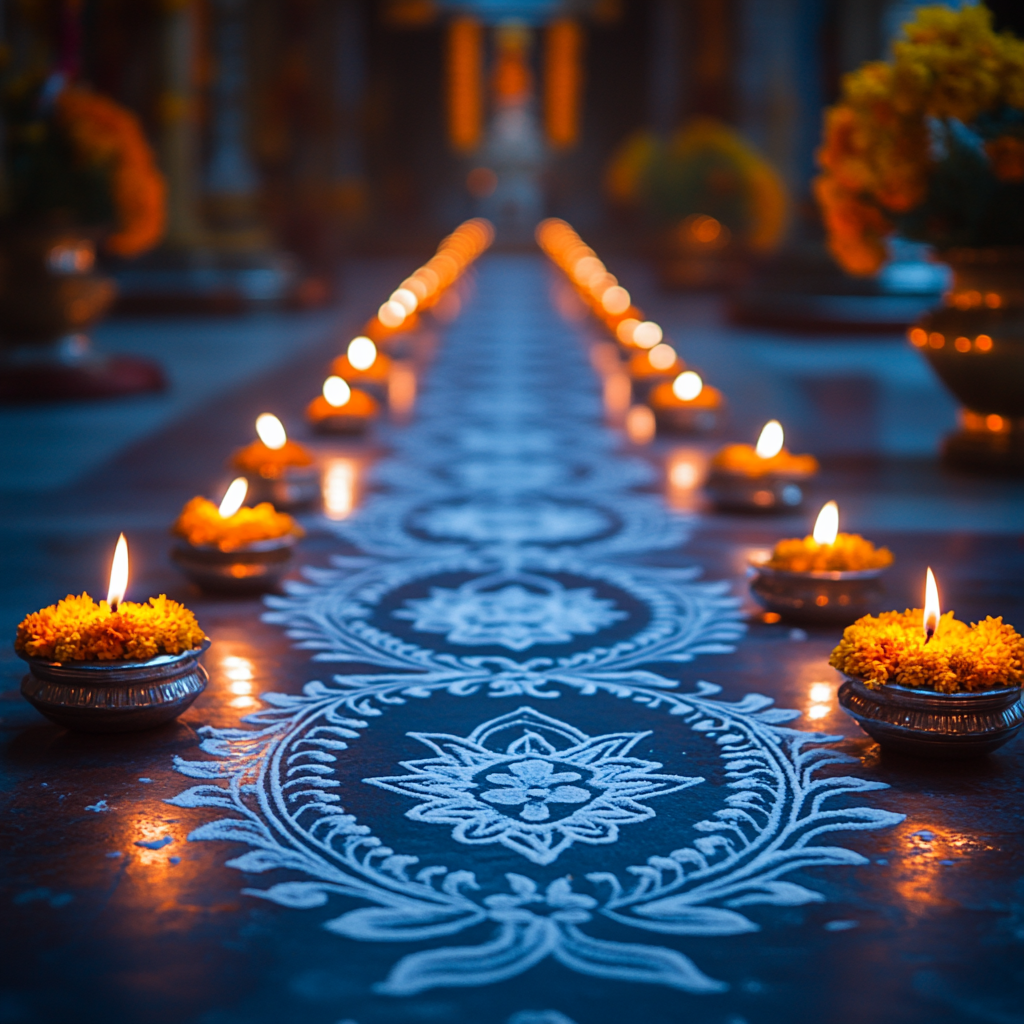
Lighting a ghee or sesame oil lamp at dawn and dusk daily throughout the month. Placing lamps in temples, on Tulasi plants, at water bodies, and on rooftops. Each lamp lit is said to illuminate one's own karma and bring moksha closer.
Karthika Snanam — Dawn Bath
Bathing before sunrise in a river, tank, or at home while chanting Vishnu or Shiva slokas. This practice, maintained for the full 30 days, is said to equal the merit of bathing in all seven sacred rivers simultaneously.
Tulasi Pooja
Tulasi (holy basil) is considered the earthly form of Lakshmi. Watering, worshipping, and circumambulating the Tulasi plant daily during Karthika is among the most meritorious acts of the month. Tulasi Vivah, performed on the Ekadashi of Karthika, marks the sacred marriage of Tulasi to Vishnu.
Fasting and Sattvic Diet
Many devotees observe partial or full fasts on Karthika Ekadashi and Purnima. Even those who do not fast strictly observe a sattvic (pure vegetarian, no onion/garlic) diet throughout the month, which is said to purify the subtle body in preparation for deepened spiritual practice.
Karthika Puranam
The reading or listening of the Karthika Puranam — chapters from the Skanda Purana specifically associated with this month — is considered immensely meritorious. Even one chapter per day throughout the month creates powerful karmic merit.
Shiva Abhishekam
Performing or sponsoring Rudrabhishekam on every Monday of Karthika Masam multiplies the ritual's effect many times over. Mondays already belong to Shiva; Karthika amplifies this connection to its maximum expression.
Key Dates Within Karthika Masam
- Karthika Ekadashi (Utthana Ekadashi) — The day Lord Vishnu awakens from his four-month cosmic sleep (Chaturmas). Fasting and lamp lighting carry immense merit. Beginning new spiritual practices on this day is highly auspicious.
- Karthika Dwadashi (Tulasi Vivah) — The sacred marriage of Tulasi to Lord Vishnu. This day marks the official end of the Chaturmas season and the beginning of the auspicious marriage season.
- Karthika Purnima (Tripuri Purnima) — The Full Moon of Karthika is one of the most sacred days in the entire Hindu calendar. Legend holds that on this day, Lord Shiva destroyed the three cities of the demons (Tripura) and released the universe from darkness. Lamp lighting, river bathing, and Shiva worship on this Purnima carry moksha-bestowing merit.
- Karthika Amavasya (Diwali) — The New Moon of Karthika coincides with Diwali in most traditions — the festival of lights that embodies the month's central theme: the triumph of divine light over darkness.
Karthika Masam for NRIs: Adapting the Practices
Living in the UK, USA, UAE, or Australia does not prevent meaningful observance of Karthika Masam. Here are practical adaptations:
- Lamp lighting: A simple ghee lamp or even a candle placed before your home altar at sunrise and sunset fulfils the spirit of Deep Daan
- Dawn bath: A cold shower before sunrise while chanting the Gayatri Mantra or Vishnu Sahasranama captures the essence of Karthika Snanam
- Tulasi plant: Many NRI households maintain a Tulasi plant — October–November is the ideal time to begin the daily pooja routine
- Remote Shiva Abhishekam: Book a Rudrabhishekam through Tapovanam Poojas to be performed in your name at an authentic Shiva temple in Kerala on each Monday of Karthika
- Karthika Purnima homam: The most powerful single ritual of the month — we perform this in your name with full video and prasadam dispatch
"You do not need to be in India to receive Karthika's blessings. The month's grace is not bound by geography — it is activated by sincerity and the conscious intention to connect with the divine light."
Book Karthika Masam Rituals
Tapovanam Poojas offers a complete Karthika Masam package: Rudrabhishekam on all four Mondays, Navagraha Pooja on Ekadashi, and Karthika Purnima Homam — with video recordings and prasadam dispatch. Available for NRI families worldwide.